

Online Safety and Social Media Communication (Warning: Long Read 😉)
Online friendship is like meeting at school near the coffee machine: it all starts with a casual comment or a shared interest, and then either you connect or you don't. But the internet is not a school hallway. Here, it's important to keep a cool head, even when the chat is buzzing. Let's figure out how to find "your people" and avoid trouble.
Where to Find Friends Who Won't Be Cringeworthy?
Let's start with the basics. What works best is the so-called "circle of interests" – this is when you look for people in communities that you are genuinely interested in. Memes, anime, poetry, DIY, skateboarding – social networks are literally teeming with thematic public pages, Discord servers, and chats. There's no shame in being a fan of something – on the contrary, it's your key to new acquaintances.

Top Platforms for Friendship:
- Discord — a place where people live, breathe, and play Genshin Impact
- Reddit (if your English is good) — you'll always find your "tribal chief" there based on interests.
- Instagram and TikTok — commenting, mutual follows, chats – all these are also paths to making acquaintances.
- Snapchat — for those who love to share moments without long texts.
Instagram and Facebook: Friends or Traps?
Social networks are an online megalopolis or an intrusive anthill: there are cool people, interesting places, but there are also scammers, strangers with strange intentions, and a constant desire to "show something to the world."
Instagram: Show Yourself, but Not Everything
- Don't post your geolocation in real-time. Especially if you are at home or somewhere unsupervised.
- Monitor your followers. If someone likes all your photos in a row, constantly writes in direct messages, and puts hearts on old posts – it's worth being wary.
- Close your profile. A private account is a step towards safety. Only add people you know personally.

Not All That Glitters on Instagram Is Gold
- Another social media trap is the illusion that everything is perfect for others.
- Filters, staged photos, "accidental" selfies from vacation or a perfect breakfast – in reality, this is only part of the truth. People don't post moments when they are sad, when they argue with their parents, when they don't want to get out of bed.
- This is not real life; these are selected frames. And if you notice that after scrolling through your feed, you feel depressed or start thinking that something is "wrong" with you – stop.
- Nothing is wrong with you; social media is just a bit of a theater. And in it, there's a lot of unhealthy self-promotion.
- It's better to have a few genuine friends in real life than 10,000 viewers in your stories who don't even know your real name.
Facebook: Many Adults – But Also Many Threats
- Don't post personal information publicly. Your date of birth, hometown, parents' names – all of this can be used to hack your account.
- Limit the audience for your posts. Use the "friends only" option, or even better, create special lists for who sees what.
- Don't take quizzes like "what kind of donut are you" or "who will you marry." This isn't just entertainment – often, such tests read your data and use it for advertising or even fraud.
Bots, Fakes, and Those Who Play on Your Emotions
In the world of social media, there are not only cool memes and new friends. There are also those who deliberately pretend, play roles, or simply test your boundaries. These can be bots, fake accounts, or even real people who specifically provoke strong emotions in you – anger, shame, anxiety, or excessive trust.
- Bots. These are accounts controlled not by a person, but by a program. They often write standard messages ("Hi, how are you?", "You're so beautiful," "Vote for me here!") and throw out links. They are not interested in your life – they need to collect likes, data, or draw you into suspicious activity.
- Fakes. People who pretend to be someone else: for example, a teenage girl, a sports guy, or a blogger. But behind this profile can be anyone – sometimes even more than one person.
- Manipulators. This is a different level. They can start with a friendly conversation but gradually introduce you to emotional swings: praising you, then criticizing you, then disappearing, then returning with "I missed you." Their goal is to influence you, create dependence on communication, or persuade you to do something that makes you uncomfortable.
How to Recognize Them?
- The profile has no normal photos or they are from other people's pages.
- Very few followers or follows only public accounts.
- The person becomes "very frank" too quickly.
- Writes as if playing a role: excessively perfect, dramatic, or overly sweet.
- Asks many questions but reveals nothing about themselves.
How to React?
- Don't fall for it. If something makes you uncomfortable – that's already a reason to be wary.
- Don't respond to provocations. Are they trying to make you angry? Ignore or block them. It's their game, not your problem.
- Do not provide personal information. Even if your "online friend" seems nice. Your photo, school, address, or pet's name might seem trivial, but scammers know how to use it.
Red Flags, or How Not to Get Trapped
Internet friends can be wonderful. But here, as in a game, there's a difficulty level. You need to be able to recognize fakes, toxic people, and dangerous connections. Here's a checklist:
- Don't send personal information: your real name, address, phone number, school – these are not for strangers.
- Video calls (but it's better not to turn on your camera yourself until you're sure the person is reliable). If a person never wants to show themselves – that's suspicious.
- Too perfect photos? Maybe it's not them. Check the image using reverse search (Google Images).
- A quick transition to "let's meet up" – another trigger. Don't fall for it.
Tip: Maintain anonymity until you are sure the person is real and safe. And always tell your parents or a trusted adult if you plan a real meeting.

STOP-Permissions: What to Pay Attention to When Installing Apps
Before installing some "new cool app," it's better not to automatically tap "OK" to all its permissions. Many applications request access to the camera, microphone, contacts, geolocation, gallery – even if they don't need it for their operation at all. This is a red flag.
- Read what the app is asking for. If a game asks for access to contacts or SMS – that's strange.
- Don't give access to everything at once. Some permissions can be granted later if they are truly needed.
- Delete apps that behave suspiciously. If after installation a lot of ads appear or the phone becomes slow – it's better to get rid of this app.
- Use antivirus or built-in security settings to check apps.
✔ Don't forget: even the cutest-looking apps can be designed to collect your data or spy on you. It's better to check three times than to regret it later.
✔ Your emotions are your territory. Don't open them to the first stranger online. Better direct your energy to those you are truly good with: offline, in a club, at training, or just nearby.
✔ Remember: your online safety is your responsibility.
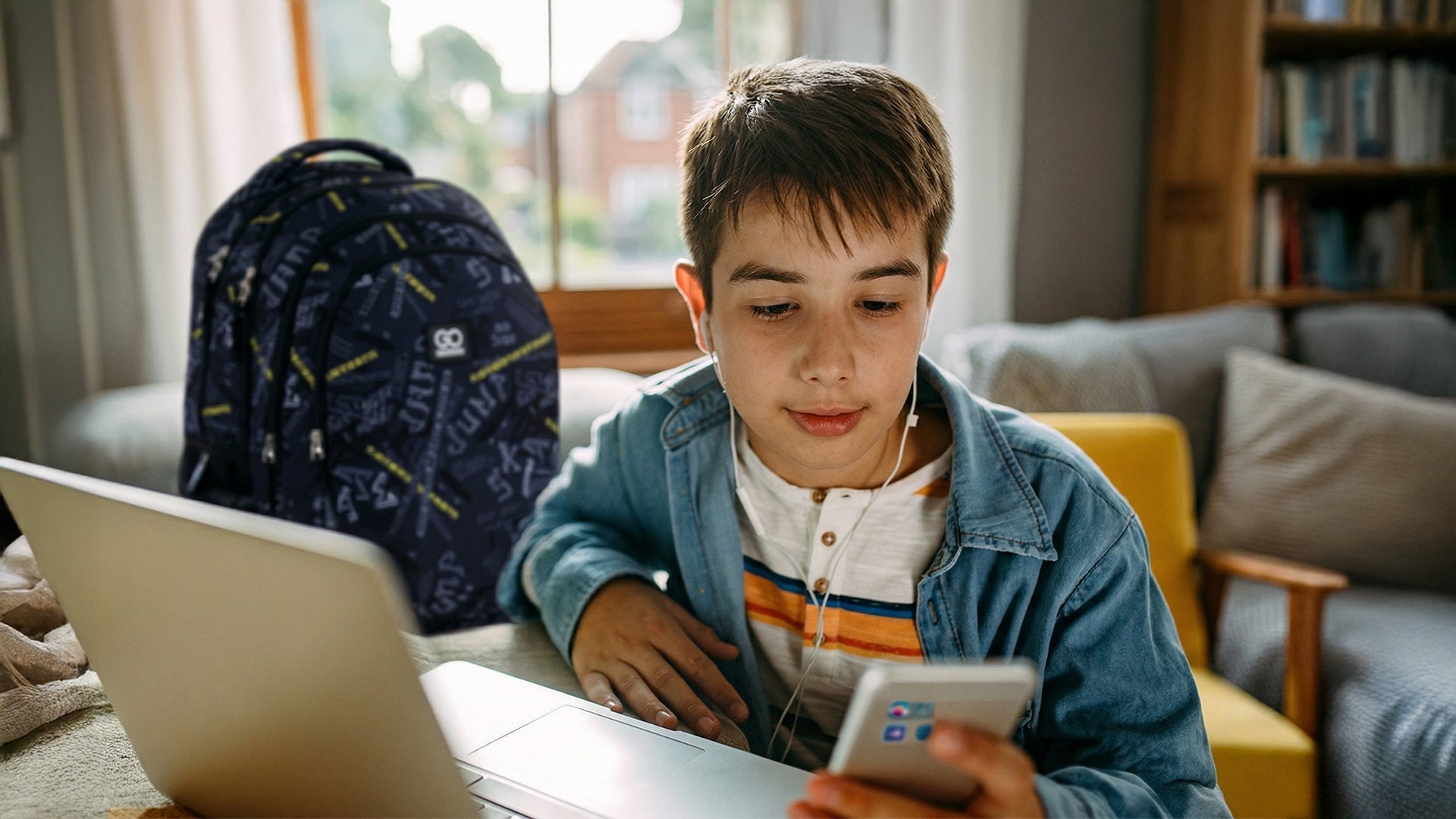
And here's another cool tip: if you already have a new stylish GoPack backpack with a compartment for gadgets – keep a power bank in it so you can always charge your phone. Online is part of life, but let it be safe.
How to Check New Virtual Acquaintances?
Okay, you chatted with someone on Discord, and it seems you're on the same wavelength. What next?
- Google their username – often this reveals something interesting (or alarming).
- Check comments and activity – how does the person behave in other chats or posts?
- Never send explicit photos: anything that goes online stays online forever.
- Friends don't make you nervous. If you feel a strange tremor after every chat – this is not your option.
Are Online Friends Real?
Yes! Many people find true, supportive friends online. But the key is safe communication. Friendship is when you feel comfortable, when you are accepted, and not forced to be someone else.
An online friend can be closer than a classmate who constantly pushes you around in gym class. Just remember the boundaries, common sense, and – ta-da – digital hygiene.
Short and to the point:
- Look for friends through shared interests.
- Don't fall for fakes and always verify new contacts.
- Protect personal information – it's only yours.
- If something seems strange – trust your intuition.
- Online friendship is cool. The main thing is that it's honest and safe.

Caution on the Internet: How to Protect Yourself and Your Information
The internet is not only an opportunity to make new friends or exchange interesting ideas, but also a place where you can encounter dangers. Here are some rules that will help you stay safe online.
1. Avoid Russian Apps and Hostile Platforms
Remember, information warfare is ongoing, so it is very important to use only verified, secure applications. Russian applications can be dangerous because they collect user data and can transmit it to third parties, and may also contain hostile elements capable of affecting your security. Therefore, choose services that have a good reputation and do not belong to hostile countries.
2. Do Not Transmit Important Personal Information
Never share excessive personal information online. This includes not only your name and place of study, but also data such as:
- Phone number, home address.
- Place of work or school.
- Information about parents.
This data can be used for fraud or to keep you under control.
3. Photos of Location and School: No!
One of the biggest risks is publishing photos of a location, especially if it's your school or place of residence. A photo of a schoolyard, classroom, or even just a house can help intruders determine your whereabouts. Avoid posting pictures where your personal locations can be clearly identified.
- What you can do: Use general photos or those where exact locations are not visible. This way you maintain your safety.
4. Cybersecurity – Not for the Weak
A website or application may look completely safe, but threats may be hidden behind it. Malware, viruses, and phishing links can steal your data or even infect your device.
- Do not click on suspicious links – even if they came from people you know. It's better to ask if it's a real link.
- Do not open files from unknown persons – even if they look interesting or important.
- Check security settings in all your accounts and applications.
5. Scam Tricks and Traps
Scammers are very skilled at impersonating real people or companies. They may offer you "incredibly interesting" offers, such as discounts, winnings, or quick money-making schemes. However, all this is just a trap to deceive you or extract money.
- Be careful with offers that seem too good to be true. The more they look like a chance to change your life in "5 minutes," the more likely it is a scam.
- Always check the source: if you are asked to enter payment information or personal data – it's better to be on guard.
Any information you share online can have consequences. There are no longer safe "unnoticed" actions – your activity always leaves a trace. Therefore, it is important not only to be careful with what you post, but also to understand well who is on the other side of the screen. The ability to use the internet safely is your main task for today.
Stay vigilant, use reliable platforms, and remember that safety is always paramount!

Not Just Online: The Importance of Real-Life Meetings and Activities
The virtual world is cool, but it cannot replace real communication. It is important to develop social skills not only in chats but also in real life. And here, various clubs, sports sections, creative studios will help a lot – places where you can not only find new friends but also truly develop.
1. Clubs and Sections – for Health and Friendship
To find friends who share your interests, you don't necessarily have to only sit online. Sign up for a sports section, yoga, dance, or art studio! This is a great opportunity to communicate with people who have similar hobbies. And also – it's good for your body and health.
- Why is this important? In real life, you learn to interact, develop teamwork, and can get support not only virtually but also in reality.
2. Creativity and Development
Attending creative studios or courses (drawing, music, theater) not only opens new horizons for self-expression but also provides a chance to meet like-minded people. In such places, genuine friendships often arise, and there are many chances to find people with whom it is then easy to transition to a "real" level of communication.
- Advantage: Performances, exhibitions, or joint projects are opportunities to grow together, support each other, and work on something big.
3. Meetings in the Real World: The Importance of "Offline" Friendship
No less important than online is meeting people in person. In the real world, there are more opportunities for deeper emotional connections, and sometimes it is here that the best and most reliable friendships are born.
- What does real communication give? It's important to learn to read non-verbal cues: facial expressions, gestures, emotions – all this helps to better understand others and establish genuine connections.

What about the backpack?
After all, friendship is a small adventure. And even if it started online or in real life, there's a chance to meet in person. And for such meetings, it's worth coming prepared. For example, with a GoPack backpack: stylish, lightweight, and inside there are not only pockets for gadgets but also space for your personal stories. Friendship that can be found in offline activities is a valuable experience that cannot be replaced. So don't just chase likes, and sometimes leave the house, join clubs and sports sections, and remember – the best moments often happen off-screen!


